
A new patient rarely walks into a clinic cold. They look you up first: where you are, who the doctor is, what you treat, what the visit costs and whether the clinic is open on Sunday. A clear, honest website answers all of that in a minute and saves your front desk dozens of calls. Clinics also have rules that a shop does not. Patient privacy comes first, and the rules on how a doctor may publicise their practice in India are stricter than for most businesses. This guide covers the pages to build, the facts patients want, and the things to leave out. It is general guidance, not legal advice, so read the last section before you publish.
01What a patient wants to know before the first visit
Think of the five questions a worried family asks on the phone. Your website should answer every one without a call.
- Who is the doctor? Name, degrees, specialty, registration number and years of practice.
- What do you treat? A plain list of conditions and procedures, in words a patient uses, not only medical terms.
- Where and when? Full address, a map pin, landmarks, parking, and opening hours including Sundays and holidays.
- What will it cost? Consultation fee, and a note on what is extra. Patients dislike surprises more than high fees.
- How do I reach you? Phone, WhatsApp and a short enquiry form for people who prefer to write.
Most clinic searches happen on a phone, often late in the evening or in a worry. Put the call and WhatsApp buttons where a thumb can reach them.

02The pages a clinic site needs
You do not need a big site. A single-doctor clinic can start with five parts, and a multi-doctor clinic adds one page per doctor.
- Home: the clinic name, the place, the specialty in one line, today's opening hours, a call button and a WhatsApp button.
- Doctor profile: a short, factual introduction, qualifications, registration number, areas of interest and languages spoken.
- Treatments or services: one short page or section for each main service, such as “Root canal treatment” or “Child vaccination”. Describe what happens in the visit, how long it takes and when to call.
- Visit information: address, map, timings, parking, accessibility, what to bring (previous reports, medicine list) and fees.
- Contact: phone, WhatsApp, email and an appointment request form.
Name the town or area in the headings. “Child specialist in Navrangpura, Ahmedabad” says more to a patient, and to anyone searching, than “Welcome”.
03Build trust with facts, not claims
Trust in healthcare comes from proof that can be checked. Show the following, and keep every statement something you could defend to a medical council.
- Registration number of the doctor with the state medical council or the National Medical Commission register.
- Qualifications exactly as registered, with the university or institution.
- Years in practice and the clinic's founding year.
- Facilities: in-house lab, X-ray, pharmacy, sterilisation process, emergency arrangements. State only what is true today.
- Real photos of the clinic, the waiting area and the equipment. Photos of patients need written consent, and the safe choice is to avoid them.
- Educational content: a short, accurate explanation of a common condition, in the doctor's own name, helps patients and shows expertise.
Avoid words that claim to be the best. “Best doctor in the city”, “number one clinic”, “guaranteed cure” and success percentages are the first things regulators object to, and patients no longer believe them anyway.
04Handle patient privacy with care
A clinic website collects health information the moment someone types a symptom into a form. Treat that as sensitive from the start.
- Ask for the minimum on the enquiry form: name, phone, the service they need and a preferred time. Do not ask for a full medical history on a website.
- Tell people not to send reports or sensitive details in the first message. Say you will ask for them in the consultation.
- Never publish a patient's name, photo, report or case without written consent. Do not describe an identifiable case, even without a name.
- Reply to Google reviews without confirming that the person is a patient. A thank-you with no treatment details is enough.
- Publish a short privacy note that says what you collect, why and who sees it. See India's data protection law and take advice if you keep records online.
05Make it easy to ask for an appointment
Many clinics still run on phone calls and a notebook. A website does not need to replace that. It only needs to give patients another way to reach you, and give your front desk a clear list to answer.
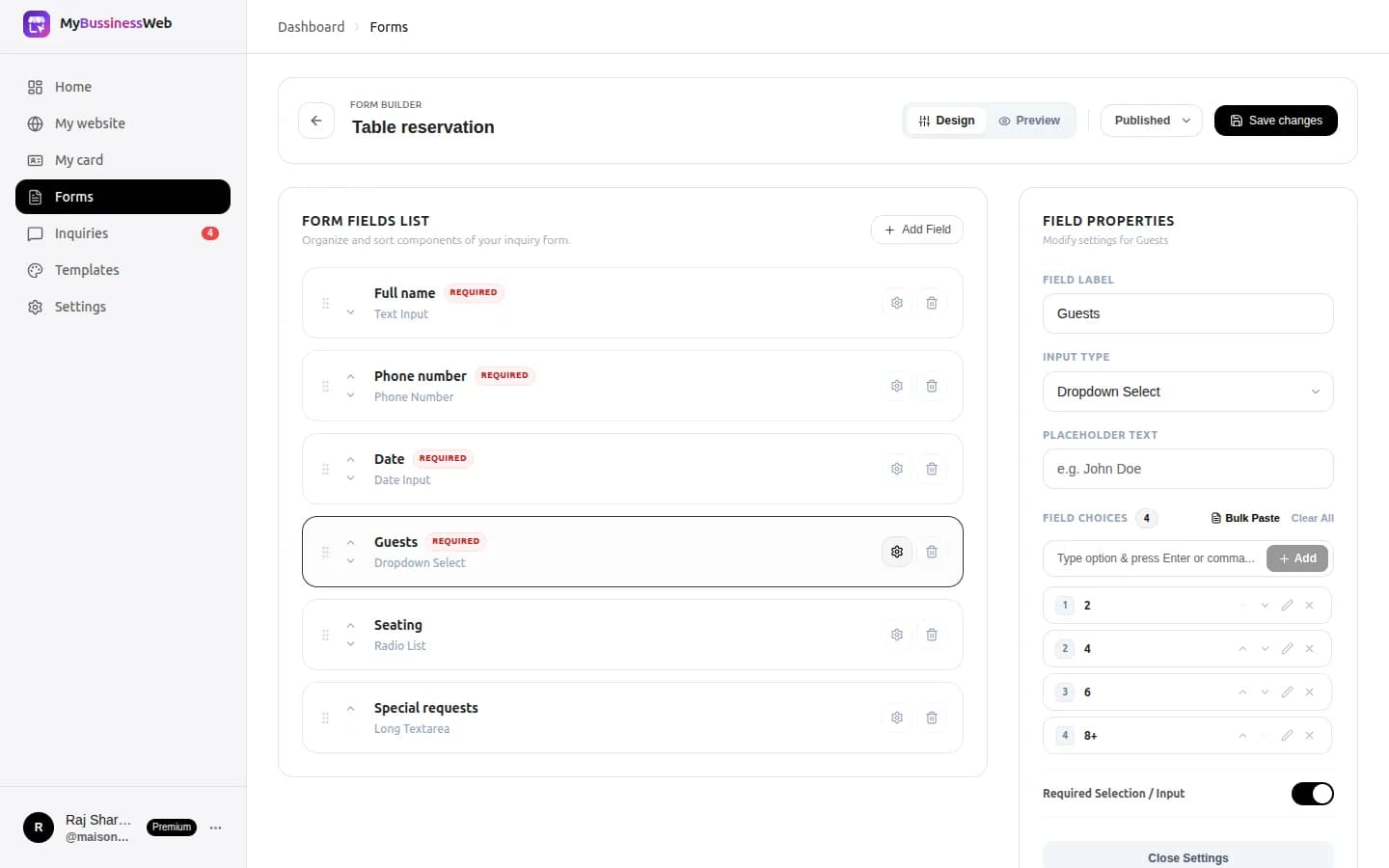
- Add a short appointment request form with name, phone number, the reason for the visit from a dropdown and a preferred day.
- Say clearly that it is a request and the clinic will confirm by call or WhatsApp, with a reply time you can keep, such as “within two hours during clinic hours”.
- Show the WhatsApp button beside the form for people who would rather message.
- Keep an emergency line or advice visible: “For emergencies, call [number] or go to the nearest hospital.”
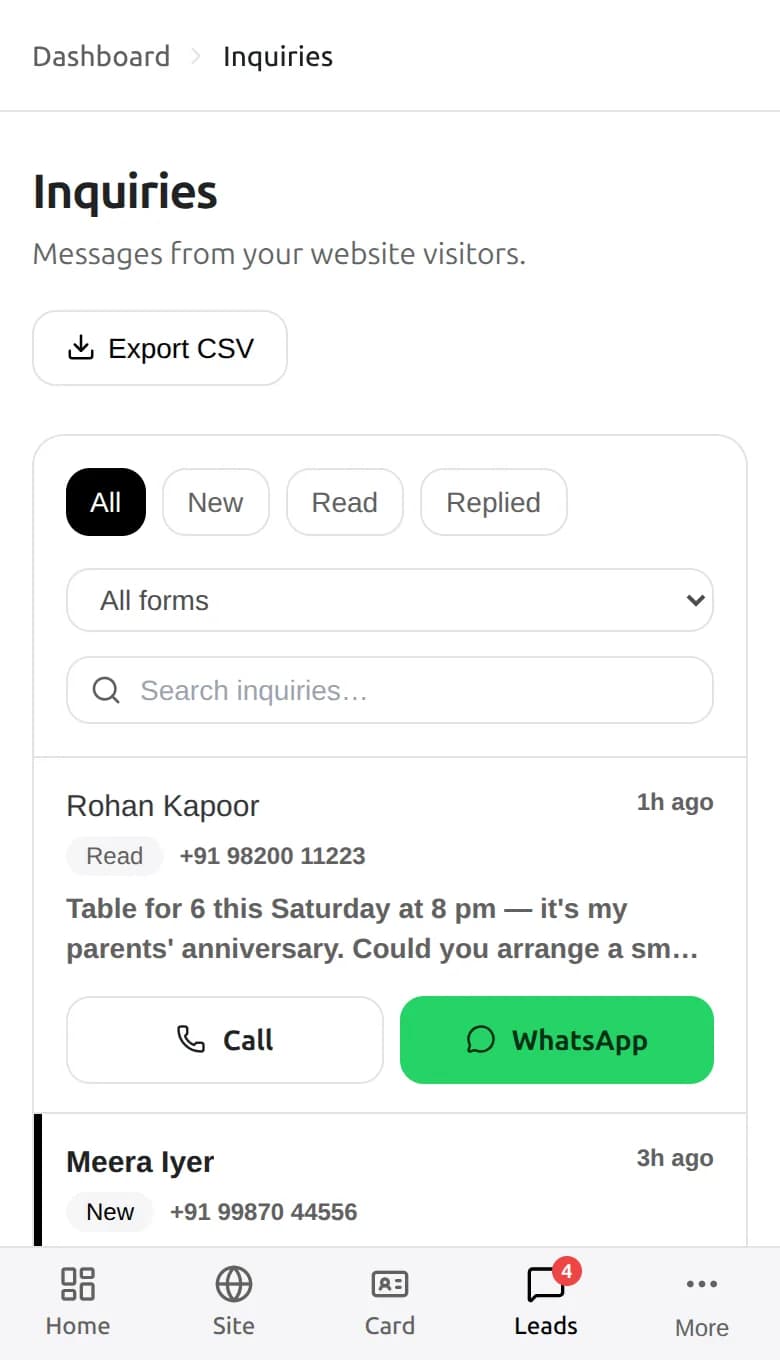
With forms and inquiries on OREYM, you build the form in the editor and every request lands in one inbox. Each one has Call and WhatsApp buttons on a phone, so the front desk can answer the same day. Check the inbox at fixed times, since the inbox does not ring an alarm for you.
06Know the rules on publicity before you publish
Medical professionals in India face limits on advertising that most businesses do not. The rules come from the National Medical Commission (NMC) and the state medical councils, and from the Dental Council, the AYUSH councils and others for those professions. They have been revised and re-issued more than once, and summaries online disagree. For example, the 2023 professional conduct regulations were put on hold soon after they were notified, and fresh guidance has followed.
Read the current text yourself on the official NMC website or ask your state medical council or association. Across the guidance we found, the direction is consistent:
- Generally fine: factual information such as name, qualifications, registration number, specialty, address, timings and fees, stated plainly.
- Generally fine: educational content about health in the doctor's own name, without promotion.
- Restricted or barred: soliciting patients, paid promotion, superlatives such as “best” or “number one”, guaranteed results, before-and-after photographs, and patient reviews or endorsements used to promote the practice.
- Take care with: photographs of the doctor, awards and rankings, and comparisons with other clinics.
Dentists, physiotherapists, homeopaths and other practitioners follow their own councils' rules, which can differ. When in doubt, say less and keep it factual.
07Keep the clinic website current
An out-of-date clinic site does harm. A patient who arrives on a holiday you forgot to post, or at an old address, loses trust at once.
- Update holiday hours the day you decide them, on the site and on your Google Business Profile.
- Change the fee line whenever the fee changes.
- Add or remove a doctor profile the week a doctor joins or leaves.
- Check the phone number and WhatsApp link every month by tapping them on your own phone.
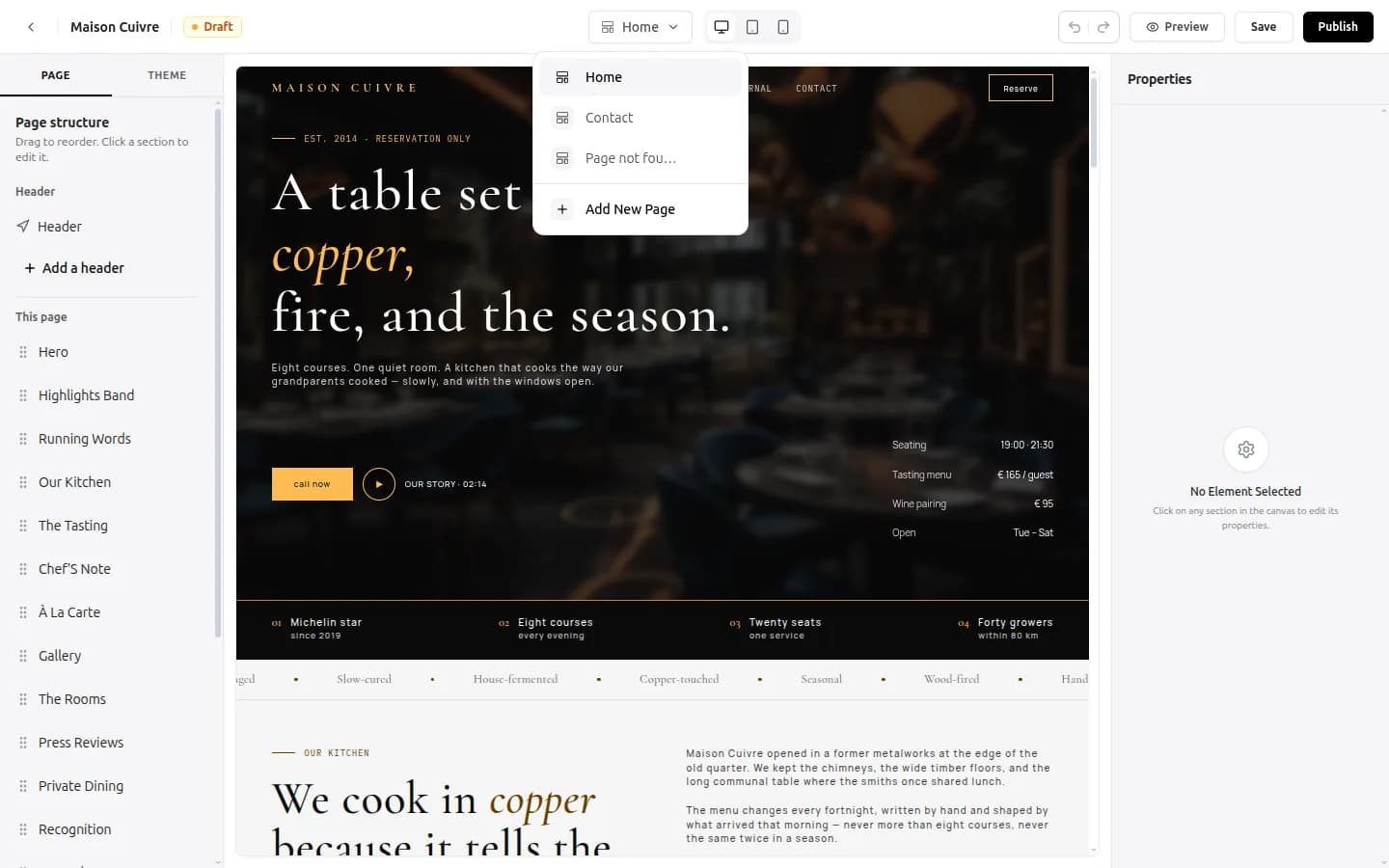
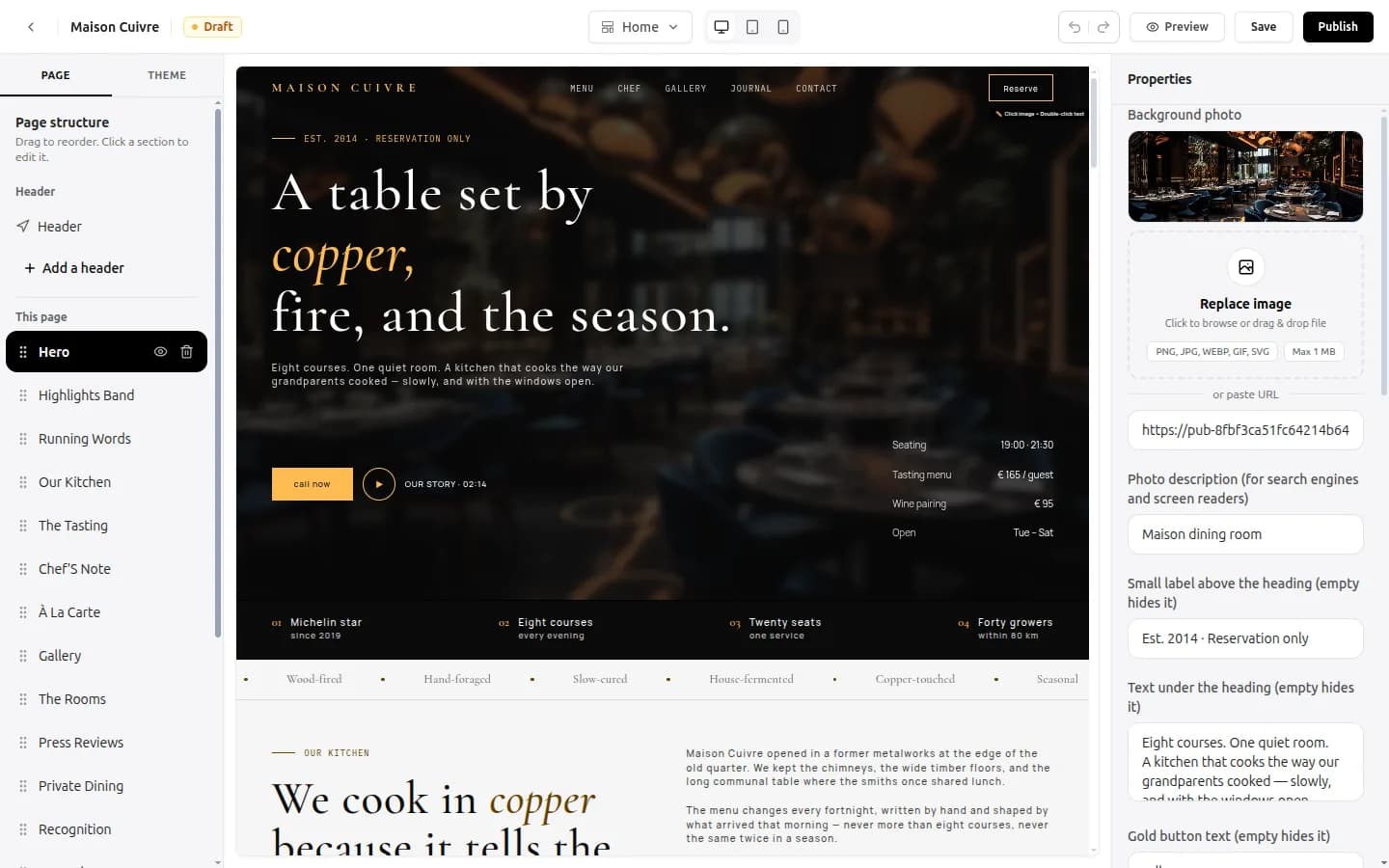
With the website builder, you edit the words straight on the page in the visual editor. A clinic template from the templates page gives you the layout, and you replace the words, photos and details.
08Your clinic website checklist
- Doctor name, qualifications, specialty and registration number
- Services in plain words, one short page or section each
- Address, map, timings and holiday hours
- Consultation fee and what is extra
- Call button and WhatsApp button that work on a phone
- Appointment request form with four fields or fewer
- A line asking people not to send reports in the first message
- A short privacy note
- No superlatives, guarantees, before-and-after photos or patient reviews used as promotion
- Checked against the current rules of your council, with the date noted
Common questions
Does a doctor or small clinic need a website?
Not by law, but most patients look a clinic up on their phone before the first visit. A simple site with the doctor's details, services, address, hours, fees and contact buttons answers their questions and saves calls.
What should a clinic website include?
The doctor's name, qualifications and registration number, the services in plain words, address with a map, opening hours, fees, phone and WhatsApp buttons, an appointment request form and a short privacy note.
Can doctors advertise on their website in India?
Rules for doctors come from the NMC and the state medical councils, and have been revised more than once. In general, factual information is accepted, while soliciting, superlatives, guarantees and patient reviews used as promotion are not. Check the current text on the official NMC site or with your council.
Can I show patient reviews on my clinic website?
The guidance we reviewed bars doctors from requesting or sharing patient reviews or endorsements to promote their practice. Reviews on Google are public, so reply with a short thank you and no treatment details. Check your council's current rules.
How should a clinic collect appointment requests online?
Use a short form with name, phone number, the reason for the visit and a preferred day. Say it is a request that the clinic will confirm by call or WhatsApp, and do not ask for medical reports in the first message.
Written by Sahil Patel
Product & growth, OREYM
Sahil works with shop owners, clinics and service businesses across India on getting found online and turning visitors into enquiries.


